
 PLASTIC
25 Aug 360 Liposuction in Montreal: What Is Lipo 360 and Who Is a Good Candidate?
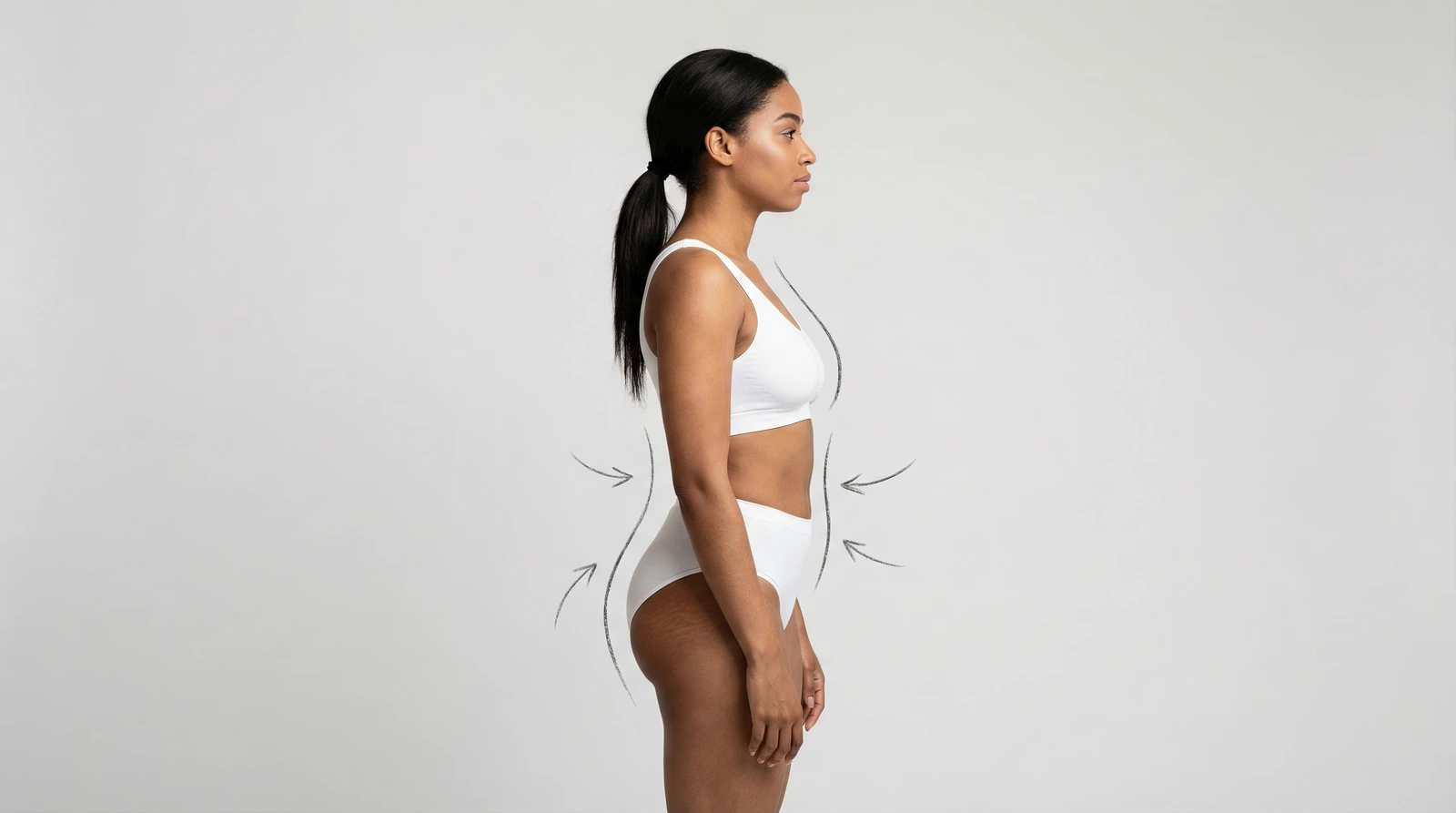
Lipo 360 is a planning concept for liposuction around the torso rather than one standardized operation. Depending on the patient’s anatomy, it may include selected areas of the abdomen, waist, flanks, and back. The “360” label does not mean that every part of the torso must be treated or that a fixed amount of fat is removed.
The purpose is to consider how front, side, and back contours relate to one another. Treating a prominent flank without assessing the adjacent abdomen and back can leave an abrupt transition. A circumferential perspective can improve proportion, but the safe extent of liposuction remains individual.
What areas can Lipo 360 include?
A treatment plan may involve the upper or lower abdomen, waist, flanks, lower back, or selected upper-back folds. These areas contain different tissue thicknesses and respond differently to fat removal. The surgeon marks the zones that contribute to the patient’s concern and plans how to blend them with untreated areas.
Lipo 360 should not be confused with circumferential skin-removal surgery. The incisions are small access points for liposuction cannulas; no broad band of loose skin is removed. It is also distinct from a Brazilian butt lift, in which harvested fat is transferred to the buttocks. Fat removal alone does not constitute a fat-transfer procedure.
What liposuction can—and cannot—change
Liposuction reduces localized fat beneath the skin. It can refine the waist, soften a disproportionate bulge, and create smoother transitions around the torso. It is not a treatment for obesity, a substitute for weight management, or a method of removing visceral fat located inside the abdomen.
Skin retraction after treatment depends on age, genetics, sun exposure, stretch marks, previous pregnancy or weight change, and the degree of existing laxity. Liposuction does not directly tighten or remove skin. If the skin envelope cannot contract around the reduced volume, looseness may remain or become more apparent.
The procedure also cannot correct rectus diastasis or an abdominal hernia. When a protruding abdomen is caused mainly by internal fat, abdominal-wall laxity, skeletal structure, or bloating, removing subcutaneous fat will have limited effect on that feature.
Who may be a good candidate?
Lipo 360 may suit a healthy adult near a stable, maintainable weight who has localized torso fat and enough skin elasticity to adapt to the change. The best candidates understand that the goal is contour refinement, not a target number on the scale.
Assessment includes fat distribution, skin quality, previous surgery and scars, body proportions, medications, nicotine exposure, and medical conditions that affect anaesthesia, bleeding, or healing. The total proposed treatment area and volume also matter. A patient who is appropriate for limited flank liposuction may not be an appropriate candidate for extensive circumferential treatment in one session.
The choice of anaesthesia depends on the number and size of areas, anticipated treatment volume, health, comfort, and the surgical setting. Although PHI Plastic Surgery offers awake liposuction for selected treatments, being awake is not automatically safer, easier, or suitable for every Lipo 360 plan.
Planning the torso as a whole
Body contouring is not achieved by removing the maximum amount of fat from every marked zone. Some fat must remain to support smooth contours and healthy tissues. Natural asymmetries in the rib cage, pelvis, muscles, and fat distribution also remain after surgery.
Useful planning questions include:
- Which areas have enough pinchable subcutaneous fat to respond?
- Where is skin laxity likely to limit the result?
- Will treating one area expose a neighbouring contour difference?
- Is the proposed scope appropriate for the patient’s health and recovery resources?
- Would staged treatment or a skin-removal operation address the concerns more safely or directly?
Photographs and measurements can help document the plan, but they cannot guarantee perfectly even fat removal or identical contours on both sides.
When abdominoplasty may be more appropriate
An abdominoplasty removes excess abdominal skin and may repair central fascial laxity. Lipo 360 removes fat but relies on the skin to redrape. Someone with a lower abdominal fold, extensive stretch-related laxity, or significant diastasis may receive limited benefit from liposuction alone.
Liposuction can sometimes be combined with abdominoplasty to refine the waist or flanks. This is a larger operation than Lipo 360 alone and has different scars, risks, and recovery. In other cases, staging procedures can keep the surgical burden within appropriate limits.
Minimally invasive energy-based treatments may be discussed for selected degrees of skin laxity, but they do not reproduce surgical skin removal and should not be presented as an abdominoplasty substitute for every patient.
Recovery across multiple areas
Swelling, bruising, tenderness, temporary firmness, and changes in skin sensation are expected. Because the torso is used when sitting, standing, sleeping, and turning, circumferential soreness can affect daily movement even though the access incisions are small. A compression garment may be recommended to manage swelling and support comfort according to the postoperative plan.
Early contours are obscured by swelling and may look uneven as different areas settle. Improvement continues over weeks and months. Time away from work depends on treatment extent and job demands; physical labour and exercise generally require a different progression from desk work.
Potential complications include bleeding, infection, seroma, contour irregularity, asymmetry, prolonged swelling, numbness, skin injury, pigment change, and the need for revision. Fluid shifts, anaesthesia complications, fat embolism, and blood clots are uncommon but important risks, particularly as treatment scope increases. Safe limits take priority over completing every desired area in one operation.
A 360-degree plan does not require 360-degree treatment
The useful idea behind Lipo 360 is comprehensive assessment. The actual operation should remain selective: treat the areas that contribute meaningfully to the contour while respecting skin quality, anatomy, and safe surgical limits.