
 PLASTIC
15 Apr Breast Asymmetry Surgery: Achieving Balanced Proportion
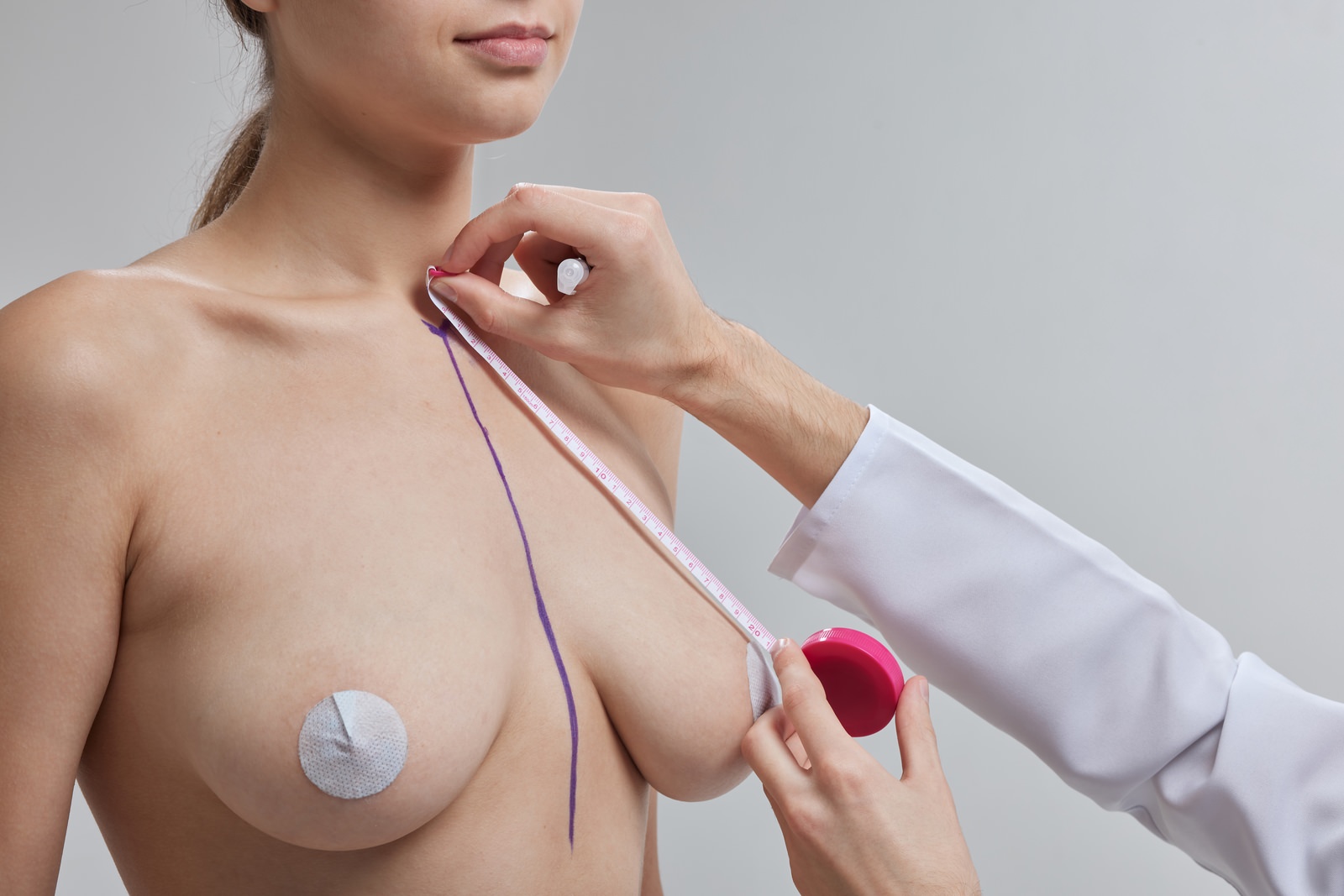
Breast asymmetry is far more common than many patients realize. While mild size or shape differences exist naturally in most women, more pronounced asymmetry can affect both aesthetic harmony and clothing fit. In certain cases, the difference in volume, nipple position, or breast footprint becomes significant enough to warrant surgical correction.
Asymmetry may originate during developmental years, when one breast grows differently than the other. It can also arise following pregnancy, breastfeeding, weight fluctuation, or prior breast surgery. The condition may involve discrepancies in size, projection, shape, or degree of ptosis.
Because asymmetry varies widely, surgical correction is highly individualized. Some patients require augmentation of the smaller breast to match the larger side. Others benefit from reduction of the larger breast to create proportional balance. In many cases, a lift procedure is incorporated to correct nipple height and glandular descent.
Implant selection plays a central role when augmentation is involved. Different implant sizes or profiles may be used on each side to achieve symmetry. Advanced planning considers chest wall anatomy, rib cage shape, and soft tissue thickness to ensure balanced projection.
In more complex cases, surgeons may combine lift, reduction, and augmentation techniques within the same surgical plan. The objective is not identical breasts — but harmonious proportion that appears natural both visually and structurally.
At PHI Surgery in Montreal, Dr. Perry Gdalevitch approaches asymmetry correction with meticulous planning. Preoperative measurements, photographic analysis, and tissue assessment guide surgical design.
Recovery depends on the combination of procedures performed but typically follows standard breast surgery timelines. Swelling resolves gradually, revealing improved symmetry over several months.
Breast asymmetry correction restores not only visual balance but also psychological confidence — allowing patients to feel comfortable in both fitted clothing and intimate settings.