
 PLASTIC
29 Aug Combining Liposuction with a Tummy Tuck: Why Many Patients Choose Both
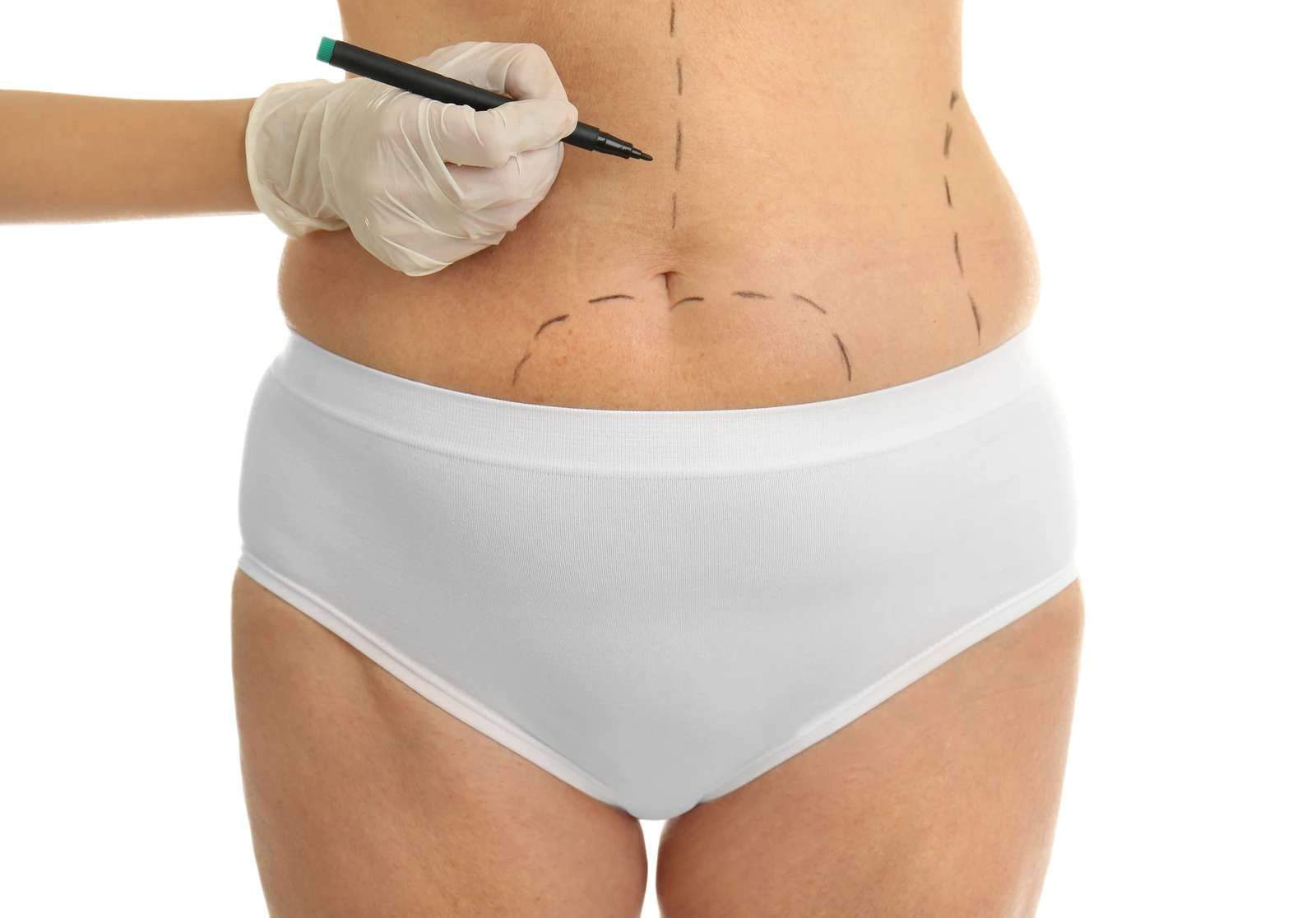
Abdominoplasty and liposuction are often discussed together because they treat different components of abdominal contour. A tummy tuck removes excess skin and can repair central abdominal-wall laxity. Liposuction reduces selected deposits of subcutaneous fat. When both skin laxity and localized fat contribute to a patient’s concern, combining the procedures may create a smoother transition between the abdomen, waist, and flanks.
That does not make combination surgery the default. Adding liposuction increases the area treated and can affect swelling, healing, operative time, and recovery. The decision depends on where fat is located, how well the skin can redrape, the blood supply of the abdominal tissues, and whether the overall surgical burden is appropriate.
Two procedures with different jobs
A full abdominoplasty generally uses a low abdominal incision to remove lax skin above and below the navel. The navel is brought through a new opening, and rectus diastasis may be repaired in the fascial layer when indicated. The operation does not remove visceral fat inside the abdomen and is not designed primarily as a fat-reduction procedure.
Liposuction uses small access incisions to remove localized fat beneath the skin. It can refine the flanks, waist, back, or selected abdominal areas, but it cannot remove a hanging skin fold or correct muscle separation. Performed alone in someone with poor elasticity, it may leave lax skin unchanged or make it more apparent.
Combining the operations makes sense only when each has a distinct role in the plan.
Why liposuction may complement a tummy tuck
Removing abdominal skin can improve the front profile while leaving fullness at the flanks or waist. Selective liposuction may blend these neighbouring areas and support a more coherent contour from different angles. It can also treat fat that lies outside the tissue removed with the tummy tuck.
The surgeon does not necessarily suction every possible area. Blood supply in the elevated abdominal tissue must be protected, and treatment is adjusted to the operative technique, scar pattern, skin thickness, and previous surgery. More aggressive fat removal does not guarantee a narrower waist and can increase the chance of irregularities or healing problems.
Which areas may be considered?
Depending on the anatomy, liposuction may be planned for the flanks, waist, hips, lower back, or carefully selected abdominal zones. A patient with circumferential torso fullness may need a different strategy from someone with a small localized flank deposit.
The expected contour is also limited by the rib cage, pelvis, abdominal muscles, and natural asymmetry. Liposuction cannot change skeletal width or create a specific silhouette that the underlying structure does not support. Visceral fat, which lies deep to the abdominal muscles, is not accessible with liposuction.
Who might benefit from both procedures?
Potential candidates have enough abdominal skin laxity to justify abdominoplasty and separate localized fat deposits that are likely to respond to liposuction. They are generally at a stable weight, healthy enough for the proposed duration and extent of surgery, and able to follow recovery restrictions.
Planning also considers previous abdominal operations, scars, pregnancy plans, weight stability, nutrition, diabetes, medications, history of blood clots, and nicotine exposure. Someone needing extensive fat removal, multiple additional procedures, or treatment around the entire torso may be safer with staged surgery. One recovery period can be convenient, but convenience is not a sufficient reason to combine operations.
When a single procedure may be enough
Abdominoplasty alone may adequately address a patient whose primary concern is loose skin and whose surrounding fat distribution is already proportionate. Liposuction alone may suit someone with localized fat, good skin elasticity, and no meaningful skin fold or abdominal-wall laxity.
Neither operation is a weight-loss treatment. A patient expecting substantial future weight loss may benefit from postponing contouring until weight is stable. Likewise, a future pregnancy can stretch abdominal skin and fascia again. Timing should reflect personal plans without implying that everyone must meet the same schedule.
Scars and contour trade-offs
The tummy tuck creates a permanent lower abdominal scar and usually a scar around the navel. Its length depends on the amount and width of skin removal. Liposuction adds small access scars in the treated regions. Although these can become less noticeable over time, no surgical incision is scarless.
A broader treatment can improve transitions but cannot promise exact symmetry or eliminate every contour variation. Removing too much superficial fat can create dents, waviness, or visible tissue adherence. Leaving a safe layer of fat and respecting blood flow are more important than pursuing maximum reduction.
Recovery after combined body contouring
Patients recover from the abdominal incision, internal tightening when performed, and liposuction swelling at the same time. Tightness, bruising, numbness, and fluid retention are common early experiences. The waist or back may feel particularly sore when liposuction has been added.
Walking begins early according to postoperative guidance, but patients may remain flexed at the waist until tension eases. Help at home is important because lifting, strenuous housework, childcare, and exercise are restricted. Drains and compression garments may be part of the plan. The timeline for work depends on whether the job is sedentary or physical and on the extent of surgery.
Swelling does not resolve evenly, so early asymmetry or firmness does not represent the final contour. Healing and scar maturation continue for months.
Understanding the added risks
Potential abdominoplasty complications include bleeding, infection, seroma, delayed wound healing, skin or fat necrosis, altered sensation, unfavourable scarring, and contour irregularity. Liposuction adds risks such as waviness, asymmetry, fluid shifts, and injury to skin or deeper structures. Anaesthesia, blood clots, and pulmonary complications are important considerations for the combined operation.
The extent and duration of surgery influence risk. Preventive measures and the safe amount of treatment are determined from the patient’s health and operative plan. In some cases, limiting liposuction or staging it after the tummy tuck is the more responsible choice.
Combining procedures for the right reason
Liposuction and a tummy tuck can be complementary when loose skin and localized fat require different solutions. Their combination should create a more complete anatomical plan—not serve as a promise of a dramatic result or a shortcut through recovery.