
 PLASTIC
09 Aug Fat Transfer Breast Augmentation: Is It Right for You?
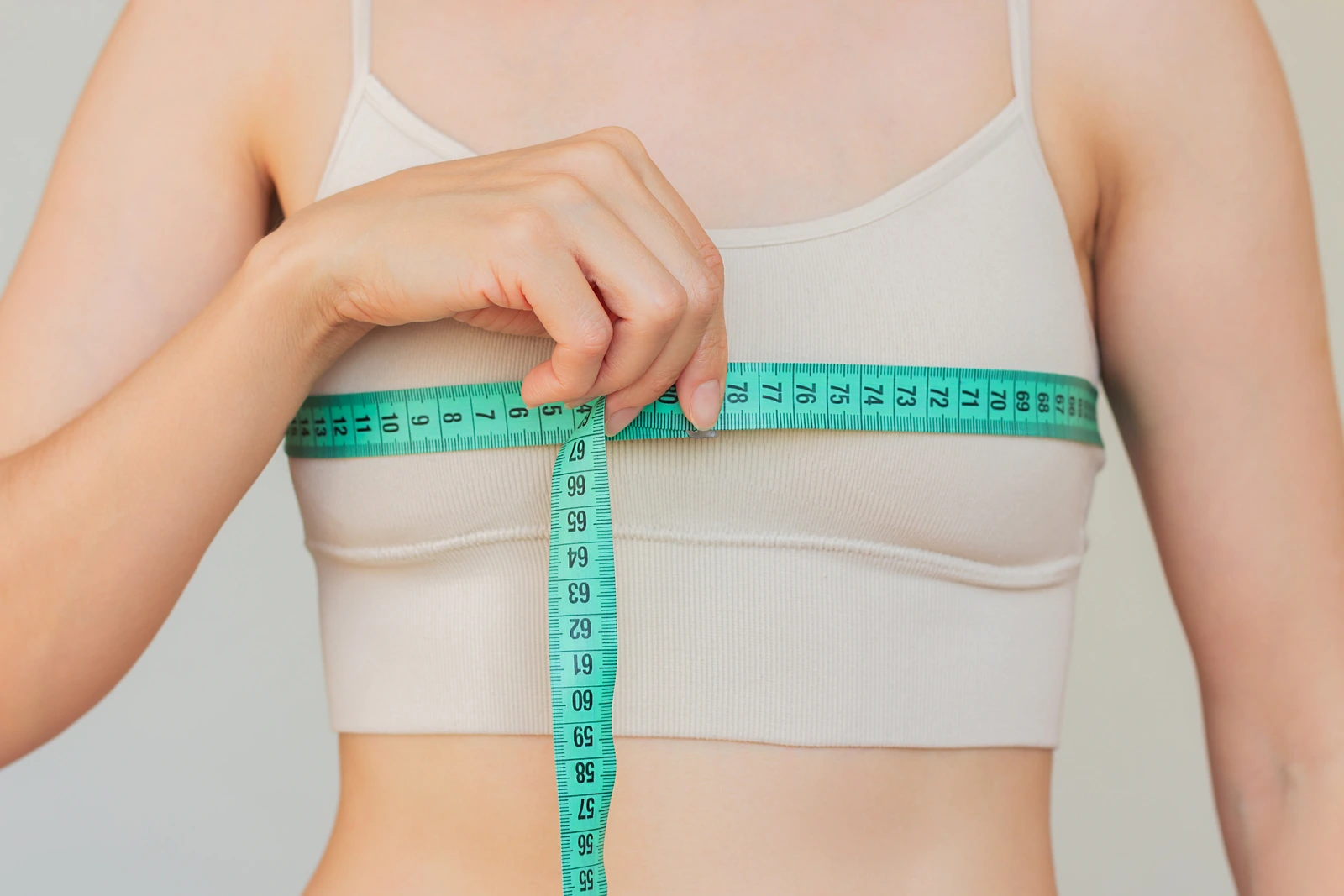
Fat transfer breast augmentation uses fat collected from another area of the body to add volume to the breasts. For someone seeking a modest change and wishing to avoid breast implants, it can be a worthwhile option. It is not, however, an implant-equivalent procedure performed with a different material. The achievable volume, breast shape, donor-site requirements, and predictability are different.
Understanding those differences helps patients decide whether breast fat grafting matches their priorities or whether implants, a breast lift, or another plan would address their concerns more directly.
What happens during breast fat grafting?
The operation has two components. First, fat is removed by liposuction from a suitable donor area, such as the abdomen, flanks, back, or thighs. The tissue is processed, and usable fat is then placed throughout selected areas of the breast.
The donor site is chosen according to where accessible fat is available and where liposuction can produce a reasonable contour. It is not a guarantee of comprehensive body reshaping, and taking more fat does not mean that more can be transferred safely to the breast. The recipient tissues must be able to support the grafted cells as they establish a blood supply.
Some transferred fat is reabsorbed during healing. The retained portion becomes living tissue and may change with later weight gain or loss. Since retention cannot be predicted exactly, the early swollen appearance should not be treated as the final breast size.
Who may be a good candidate?
Fat transfer often suits patients who want a subtle or moderate increase, have enough donor fat, and accept that more than one treatment may be needed to reach a particular goal. It may also be used to improve selected contour irregularities or asymmetries, although exact symmetry cannot be promised.
Candidacy depends on breast and chest anatomy, skin quality, previous breast surgery, medical history, weight stability, medications, nicotine exposure, and the findings of appropriate breast screening. A very lean patient may not have enough donor tissue. Someone seeking a substantial size increase or a precisely selected volume may find implants more predictable.
Future pregnancy and major weight changes can alter both the breasts and donor areas. Surgery does not need to follow one universal timeline, but plans for pregnancy, breastfeeding, or weight change are relevant to the timing and durability of the result.
What kind of change can fat transfer provide?
Fat grafting adds volume but provides less control over final size than an implant because some fat will not survive. It is generally better suited to measured enhancement than to a dramatic increase. A specific cup size cannot be guaranteed.
The procedure can add fullness in selected parts of the breast and may soften minor differences between the sides. It does not reliably lift a nipple that has descended or remove a stretched skin envelope. When ptosis is the main concern, a mastopexy may be the more relevant operation; adding fat alone can increase volume without correcting the breast position.
The shape also remains influenced by the existing breast footprint and skin. Fat does not behave like a shaped device, and it cannot always create the same upper-pole projection that an implant can provide.
Fat transfer compared with breast implants
| Consideration | Fat transfer | Breast implants |
|---|---|---|
| Source of volume | The patient’s own fat | A saline- or silicone-filled medical device |
| Typical scale of change | Usually modest and partly dependent on fat retention | A broader, more predictable range of volumes and dimensions |
| Donor site | Liposuction is required | No fat donor area is needed |
| Scars | Small liposuction and injection access incisions | An incision is required to create the implant pocket |
| Long-term considerations | Retained fat can change with weight; cysts or fat necrosis may occur | Device surveillance and possible future revision are part of planning |
Avoiding an implant means avoiding implant-specific problems such as rupture and capsular contracture. It does not eliminate surgical risks or the possibility of another operation. Conversely, implants are not automatically the better choice for patients who want more volume; their dimensions still need to fit the tissues, and their long-term implications require informed discussion.
Does all transferred fat survive?
No. Fat cells need to receive nutrients from the surrounding tissue and develop a new blood supply. Cells that do not survive may be absorbed, or they may contribute to firm areas, oil cysts, or calcifications. Surgeons plan around expected variability, but no responsible estimate can guarantee an exact percentage for an individual patient.
When one session does not provide enough retained volume, staged grafting may be considered after healing. This depends on the remaining goal, donor-fat availability, and condition of the breast tissue—not simply on a request to replace the volume that was absorbed.
Breast screening and changes on imaging
Fat necrosis and calcification can create findings on mammography or other breast imaging. Radiologists can often distinguish postoperative changes, but any new lump or imaging finding still deserves appropriate assessment. Patients should tell their breast-imaging provider about prior fat grafting and follow screening recommendations based on their age, history, and healthcare guidance.
Breast fat grafting is an aesthetic procedure and should not be conflated with reconstructive fat grafting after cancer treatment. A personal history of breast disease, high-risk screening, or previous reconstruction may require coordination with the clinicians involved in that care.
Recovery in the breasts and donor area
Swelling, bruising, tenderness, and temporary changes in sensation may occur in both treatment areas. The liposuction sites can account for a substantial part of the early discomfort and activity restrictions. Compression garments may be recommended for the donor area, while pressure on the grafted breasts may need to be managed according to the surgeon’s instructions.
The timing of work, driving, lifting, exercise, and supportive garments varies with the amount of liposuction, the extent of grafting, and individual healing. The breasts gradually settle as swelling decreases and fat retention stabilizes.
Risks include bleeding, infection, poor wound healing, asymmetry, contour irregularities, under- or overcorrection, changes in sensation, donor-site dents or waviness, fat necrosis, oil cysts, and calcifications. Anaesthesia and blood-clot risks also apply. Revision or further grafting may be appropriate in some cases.
Deciding whether the trade-offs fit your goals
Fat transfer breast augmentation offers an implant-free route to added breast volume, but it works within the limits of available donor fat and variable retention. The right candidate values a restrained change, understands that both the breasts and donor area must heal, and is comfortable with the possibility of staged treatment.